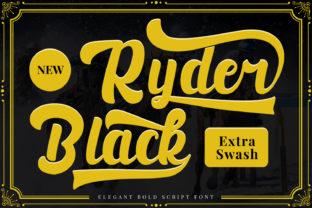
Black Ryder: A Bold Script Font for Editorial Elegance
There’s something about the moment you choose a font that feels like choosing a voice for your content. Recently, I found myself in the quiet of my studio, redesigning the header for a lifestyle blog. The previous font had become too familiar, and I needed something with character—something that would speak to the reader before they even read a word. That’s when Black Ryder came into play.
Black Ryder is a bold script font with smooth curves that immediately caught my eye. It belongs to the Script Amp family of fonts, and it stands out as a premium display font that blends elegance with confidence. Its rhythm and flow are unmistakable, making it ideal for any editorial project where visual impact matters more than strict readability.
A Font with Character
The visual character of Black Ryder is defined by its strong, expressive strokes and flowing curves. It carries a sense of authority without feeling overbearing, and it has a subtle warmth that makes it feel approachable. This balance of strength and softness gives it a unique editorial appeal—it can be both commanding and inviting, depending on how it's used.
I tested it in a variety of layouts, from magazine covers to newsletter headers, and each time it added a layer of sophistication. For a digital magazine layout focused on wellness, Black Ryder worked beautifully as the main title font. Its boldness made the cover stand out, while its fluidity gave the piece a sense of movement and life.
Where Black Ryder Shines in Real Projects
In editorial design, not every font is suited for every task. Black Ryder, for instance, excels in roles that demand attention. It works exceptionally well for blog headers, article titles, chapter openers, pull quotes, and decorative accents. It brings energy to a layout without overshadowing the content itself.
- Blog Headers: As a header for a lifestyle blog, Black Ryder adds personality and sets the tone for the content ahead.
- Magazine Covers: Its bold nature makes it perfect for grabbing attention on print or digital covers.
- Pull Quotes: When highlighting a key quote, Black Ryder adds emphasis and visual interest.
- Chapter Openers: In an ebook or workbook, it helps signal transitions and keep readers engaged.
However, it’s important to note that Black Ryder may not be the best choice for body copy or small captions. Its expressive style can become overwhelming in dense paragraphs or formal reports. Instead, it shines when used sparingly to highlight key elements in a layout.
Readability and Practical Use
While Black Ryder is primarily a display font, its readability on screen and in print is surprisingly good, especially at larger sizes. For digital projects like newsletters or course PDFs, it performs well when paired with a clean sans serif font for body text. This combination ensures that the overall design remains legible and visually balanced.
When working with mobile layouts, it's essential to test how Black Ryder appears at smaller sizes. While it maintains its charm, it should be used with care to avoid sacrificing clarity. For long-form content, it's best reserved for headings and decorative elements rather than extended reading.
Font Pairing and Design Consistency
One of the joys of using a bold script font like Black Ryder is finding the right complement. In my recent project, I paired it with a modern serif font for body text, which created a harmonious contrast. This pairing helped maintain a consistent editorial identity while allowing the design to feel dynamic and professional.
For navigation menus or captions, a clean sans serif font worked well to keep things simple and readable. The key is to ensure that the overall design remains cohesive, with Black Ryder serving as a visual anchor rather than a distraction.
Before using Black Ryder in commercial projects, it’s wise to check the included styles, alternates, ligatures, weights, and multilingual support. Ensuring that the font meets your specific needs—whether for a printable planner, a coaching workbook, or a digital magazine—is crucial for maintaining quality and consistency across all formats.