Brayhonest: A Script Amp Font That Anchors Campaign Personality
I was finalizing a fall-themed Instagram carousel for a small-batch ceramic studio’s limited-edition mug launch—tight deadline, three visuals to lock in before noon—when I opened the thumbnail preview on my phone and paused. The headline “Hand-Thrown • Small Batch • First Frost” sat in Brayhonest over a warm oat-colored background. It didn’t just look styled. It looked felt. Like the kind of detail that makes someone scroll back up—not because it’s loud, but because it’s quietly confident. That’s when I knew Brayhonest wasn’t just another script font. It was a campaign collaborator.
What Brayhonest Actually Delivers (No Hype, Just Workflow Truth)
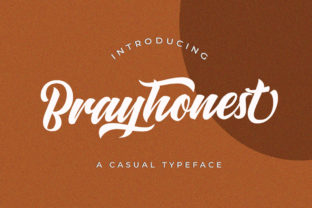
Brayhonest is a Script Amp font: expressive but controlled, nostalgic without leaning into retro cliché. Its letterforms have gentle contrast, soft entry/exit strokes, and subtle irregularity—enough to feel human-drawn, not AI-perfect. It doesn’t shout “vintage” or “luxury” outright; instead, it carries warmth, sincerity, and a quiet boldness. Think handwritten invitation meets editorial headline—not messy, not sterile. It’s the kind of typeface that says “I care about how this feels,” not just how it reads.
In practice, Brayhonest shines where personality matters more than neutrality: product teasers, seasonal banners, quote overlays, course launch headers, and branded template packs. I’ve used it for YouTube thumbnail text (“Your First 5 Minutes Matter”), Pinterest pin titles (“Slow Living Starts Here”), and email banner headers (“New Drop: Just Landed”). Each time, it held up across devices—especially on mobile previews—because its x-height is generous and its spacing avoids tight collisions, even at 28–36px on screen.
Where It Works Best (And Where to Pause)
Brayhonest is built for impact, not endurance. Use it for:
- Short display text: headlines, campaign labels (“Fall Edit”, “Early Access”, “Live Now”), logo-style wordmarks, and reel covers where legibility must survive fast-scrolling feeds;
- Overlay text on imagery: it holds contrast well against muted backgrounds (linen, clay, foggy gradients), especially with light stroke weight and modest tracking;
- Branded consistency across touchpoints: one font choice that ties together an Instagram story highlight icon, a webinar banner, and a printable shop promo—without needing custom illustration.
It’s less ideal for:
- Body copy or paragraphs—even short captions lose clarity below 20px;
- Dense layouts like comparison tables, feature lists, or multi-step instructions;
- Formal B2B announcements or compliance-heavy messaging where neutrality and predictability matter more than charm.
On dark backgrounds, I always test with a slight white stroke or subtle drop shadow—Brayhonest’s delicate terminals can soften too much otherwise. On light backgrounds? It sings. No extra effects needed.
Real Pairings That Keep Your Design Grounded
Brayhonest isn’t meant to go solo—and it shouldn’t. In every campaign where it’s performed best, it’s paired with a clean, highly legible sans serif: think Inter, Poppins, or DM Sans for digital use, or a sturdy serif like Playfair Display for print-forward assets like packaging or postcards. The contrast does the work: Brayhonest brings voice, the companion font delivers clarity.
I avoid pairing it with other scripts or overly decorative fonts—they compete instead of complement. And while you *can* layer it with a second script for a mood board or aesthetic guide, in live campaign assets, simplicity wins. One expressive font + one functional font = reliable hierarchy, fast comprehension, and visual breathing room.
Before You Drop It Into Your Next Campaign
A few practical checks saved me time (and client revisions):
- Check included styles: Brayhonest comes with standard weights (Regular, Bold) and often includes alternates and ligatures—use those for subtle variation in repeated uses (e.g., different “&” or “ff” combos across social posts);
- Verify file formats: Make sure you have WOFF2 for web use and OTF/TTF for design apps—some bundles only include desktop formats, which won’t work in Canva or Figma web;
- Licensing clarity: Confirm commercial use rights cover digital ads, client work, and resale items (like branded template packs)—Script Amp fonts usually do, but always double-check the license before using in a Shopify banner or paid ad asset;
- Multilingual needs?: If your audience spans Spanish, French, or Portuguese, scan the character set—Brayhonest supports basic Latin-1, but extended diacritics may be limited.
One last note: Brayhonest rewards intentionality. It’s not a “drop-in-and-forget” font. Spend five minutes adjusting tracking for your headline length. Try two weights side-by-side on your thumbnail mockup. See how it behaves next to your brand color on both iOS and Android previews. That small investment pays off in cohesion—and in the kind of quiet confidence that makes people pause, recognize, and remember.
Because great campaign typography isn’t about being seen first. It’s about being felt, right away—and remembered after the scroll ends.