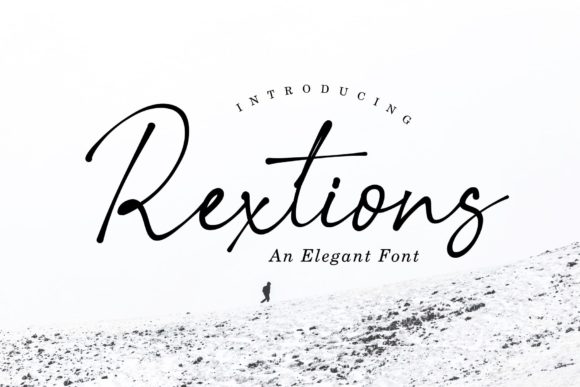
Rextions: A Script Font with Editorial Grace
There’s something about the right font that can transform a design from ordinary to unforgettable. I recently found myself in the quiet moment of choosing a cover font for a lifestyle blog redesign, and Rextions stood out as a natural fit. It wasn’t just the elegance of its curves or the authenticity of its glyphs—it was the way it felt like a voice, one that could whisper confidence into any editorial layout.
The Visual Character of Rextions
Rextions is a script font that feels both refined and approachable. Its glyphs are crafted with a rhythm that echoes the flow of handwriting, yet maintains a level of polish that makes it feel intentional. This balance is rare; many script fonts lean too heavily into either the casual or the ornate. Rextions finds a middle ground that works beautifully in editorial contexts where readability and style must coexist.
The personality of Rextions is warm and inviting. It carries a subtle energy that suggests movement and emotion, making it ideal for projects that aim to evoke a sense of connection or storytelling. Whether used in a wedding guide or a digital magazine, it adds a layer of sophistication without overshadowing the content itself.
Real-World Applications in Editorial Design
I tested Rextions in a few different editorial scenarios, and each time it brought a unique benefit. For the blog header, it provided a clean, modern look that didn’t feel outdated or overly decorative. In a recipe ebook, it worked well as a title font, giving each section a personal touch while keeping the overall design cohesive.
In a coaching workbook, I used Rextions for chapter openers and pull quotes. The result was a visual hierarchy that guided the reader through the material with ease. It also performed well in a newsletter graphic, where it helped draw attention to key messages without overwhelming the viewer.
What struck me most was how Rextions handled longer text. While it’s not a body font, it can be used effectively in short bursts—such as section headings, captions, or decorative accents. When paired with a clean sans serif font for body copy, it created a strong contrast that enhanced readability and visual interest.
Readability Across Formats and Devices
One of the things I considered when using Rextions was its performance across different media. On screen, especially in mobile layouts, the font remained legible and didn’t lose its character. In PDF exports and print materials, the details of the script were preserved, which is essential for maintaining a professional look in physical publications.
For long-form content, I found that Rextions was best reserved for titles and subtitles. Using it for dense paragraphs or small captions would have been distracting. However, when used sparingly, it added a nice touch of personality to the page without compromising the reader’s experience.
Font Pairing and Practical Considerations
When working with Rextions, I paired it with a readable serif font for body text and a clean sans serif for navigation and captions. This combination allowed the design to feel balanced and intentional. It’s important to remember that Rextions is a display font, so it should be used strategically rather than excessively.
Before incorporating Rextions into any project, I made sure to check the included styles, alternates, ligatures, weights, and multilingual support. These features can significantly impact how versatile the font is for different types of content. Also, verifying the commercial font licensing was crucial, especially since I was planning to use it in a paid newsletter and downloadable course materials.
Rextions isn’t just another script font—it’s a thoughtful addition to any designer’s toolkit. Whether you're creating a digital magazine, a printable planner, or a course PDF, it brings a level of authenticity and elegance that enhances the overall editorial experience. And for those who value both form and function, Rextions delivers on both fronts with a grace that feels timeless.