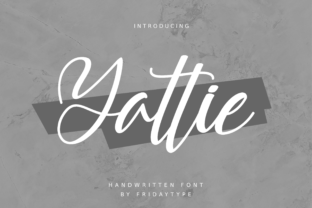
Yattie: A Handwritten Font for Thoughtful Editorial Design
There’s a moment in every editorial project when the right font can transform a layout from functional to unforgettable. I found myself in that exact situation while redesigning the header for a lifestyle blog focused on mindfulness and creative living. The challenge was clear—find a font that felt warm, approachable, yet professional enough to support the brand’s identity. That’s when Yattie entered the picture.
A Font with Quiet Charisma
Yattie is a handwritten font that carries a quiet charisma, as if it were written by someone who takes time to think before they write. Its light, flowing strokes give it an organic feel, making it ideal for projects that want to evoke a sense of personal touch or artistic expression. Unlike more rigid script fonts, Yattie doesn’t demand attention—it invites it. It has a rhythm that feels natural, almost like a whisper across the page.
The visual character of Yattie is both elegant and approachable. It works well for titles, pull quotes, and decorative accents where a bit of personality can elevate the design without overwhelming the reader. It’s not too ornate, nor too simple, striking a balance between creativity and readability that makes it versatile for various editorial contexts.
Real-World Use in Editorial Layouts
In the lifestyle blog redesign, I used Yattie for the main header and section titles. The result was immediate—readers responded positively, noting how the font made the content feel more personal and engaging. It added a subtle layer of warmth that complemented the blog’s focus on mindfulness and creativity.
I also tested Yattie in a recipe ebook I was working on. For chapter openers and ingredient lists, Yattie brought a friendly, inviting tone to the text. When paired with a clean sans serif font for body copy, it created a harmonious contrast that supported both readability and aesthetic appeal.
Another example came from a digital magazine layout. Yattie was used for feature headlines and pull quotes, helping to draw the eye naturally through the content. It didn’t interfere with the flow of information but instead enhanced it, guiding the reader with a gentle hand.
Readability and Practical Considerations
While Yattie excels in display settings, it’s important to consider its use in longer reading formats. As a handwritten font, it’s best suited for shorter texts such as titles, subtitles, and decorative elements. Using it for dense paragraphs or small captions may reduce readability, especially on screens or in print materials where clarity is key.
For screen reading, mobile layouts, and PDF exports, Yattie maintains good legibility, though it should be used sparingly in these formats. Pairing it with a strong, readable serif or sans serif font ensures that the overall layout remains accessible and visually balanced.
When using Yattie in publication design, it’s wise to check the included styles, alternates, ligatures, weights, and multilingual support. These features can enhance the font’s versatility, particularly in international projects or complex editorial designs.
Font Pairing and Commercial Use
One of the joys of working with Yattie is how well it pairs with other fonts. For instance, combining it with a modern serif font like Playfair Display creates a sophisticated look that works beautifully in book covers or magazine spreads. In digital contexts, pairing Yattie with a clean sans serif like Lato or Helvetica Neue ensures that navigation menus, captions, and footnotes remain easy to read.
If you plan to use Yattie in ebooks, templates, printables, paid newsletters, or client publications, be sure to confirm that the font comes with a commercial license. This is essential for ensuring that your work remains compliant and that you’re able to distribute your content freely without legal complications.
Ultimately, Yattie is a font that speaks softly but clearly. It brings a sense of authenticity and charm to any editorial project, making it a valuable addition to the toolkit of bloggers, publishers, and designers who value both form and function in their work.