Craft Holic: A Designer’s Real-World Type Test
First Glance: Warm, Intentional, Unhurried
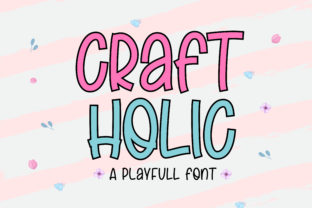
Craft Holic doesn’t shout. It leans in—slightly tilted, softly connected, with a gentle pressure variation that feels hand-guided but never sloppy. This isn’t a frantic brush script or a rigid calligraphic revival. It’s a modern script font with breathing room, where each lowercase “a” and “g” has quiet personality, and the uppercase letters carry just enough presence to anchor a logo without dominating it. The rhythm is relaxed but deliberate—like someone sketching a brand mark on tracing paper before committing to ink. It reads as approachable, artisanal, and quietly confident—ideal for makers, small studios, wellness brands, indie publishers, and lifestyle businesses that value authenticity over polish.
Where It Lives Best (and Where It Doesn’t)
Craft Holic thrives in contexts where tone matters more than density. In logo design, it works beautifully as a primary wordmark for craft-based businesses—think pottery studios, botanical skincare lines, or handmade stationery brands. Its natural flow supports brand identity systems that pair well with organic textures, muted palettes, and soft photography. On packaging design—especially product labels for candles, teas, or small-batch preserves—it adds warmth and distinction without competing with ingredients or certifications.
For social media graphics and digital ads, Craft Holic shines in short-form impact: quote cards, limited-time offer banners, or Instagram story headers. It performs strongly in editorial design when used sparingly—pull quotes in blog posts, chapter openers in e-books, or masthead accents in print zines. As a display font, it holds its own in website headers and Canva templates meant for creative entrepreneurs. And yes—it cuts through cleanly on Cricut projects and printable design, especially when cut from quality vinyl or printed on textured cardstock.
But here’s the honest part: Craft Holic is not built for body text. Don’t drop it into paragraph form—even at 16px. Its ligatures and subtle joins blur at smaller sizes, and spacing tightens unpredictably in longer strings. It also struggles in high-contrast environments like white text on dark backgrounds unless carefully tracked and tested. Avoid using it for navigation menus, legal disclaimers, or data-heavy flyers. It’s not a workhorse; it’s a highlighter.
Readability, Trust, and the Subtle Psychology of Letterforms
Readability isn’t just about legibility—it’s about how quickly a viewer decodes intent. Craft Holic communicates care and craft before a single word is read. That builds trust with audiences who associate thoughtful typography with integrity—especially in premium packaging or boutique digital products. But that same warmth can backfire if misapplied. Slapping Craft Holic onto a fintech dashboard or a corporate annual report creates dissonance. The font signals intimacy; the context demands authority. Mismatched typeface choices erode recognition and dilute professionalism faster than any other design decision.
Engagement rises when Craft Holic is used with restraint and intention. A single line of headline text paired with a clean sans serif body font creates clear hierarchy and visual breathing room. That contrast—soft script against structured geometry—feels contemporary and grounded. It also helps maintain brand consistency across touchpoints: the same rhythm appears on a business card, a Shopify banner, and a printable workshop workbook, reinforcing identity without repetition fatigue.
Font Pairing: What Works (and What Feels Forced)
Craft Holic pairs most naturally with humanist sans serif fonts—think Inter, Poppins, or Lato—not geometric ones like Montserrat or Futura. The warmth of its curves needs counterbalance, not competition. Try it beside a warm serif font like Merriweather or Playfair Display for editorial design or book covers; the contrast elevates both. Avoid pairing it with other script fonts or handwritten fonts—they’ll fight for attention and muddy the voice. And skip ultra-thin or ultra-bold display fonts unless you’re aiming for deliberate tension (e.g., luxury cosmetics branding where contrast *is* the message).
One underrated test? Set Craft Holic next to a neutral monospace or typewriter-style font. It reveals how much character Craft Holic carries—and whether your layout needs that energy or would benefit from quieter support.
Designer Notes You’ll Actually Use
- Test it in black and white first. Craft Holic’s charm lives in contrast and weight distribution—not color. If it falters without hue, it’ll falter in print or accessibility modes.
- Check small-size readability on real mockups. Render it at 14px on a product label mockup—not just in your font menu. See how “&” or “.” hold up.
- Compare uppercase vs. lowercase usage. The caps have more presence and tighter spacing. Use them for standalone logos or initials; lean into lowercase for friendly, conversational tone.
- Review spacing across weights. Some script fonts tighten awkwardly in bold variants. Craft Holic’s regular weight is its strongest—use bold sparingly, if at all.
- Try it beside serif, sans serif, script, handwritten, and display fonts. Not for theory—but to feel which pairing makes your layout feel resolved, not cluttered.
- Confirm commercial licensing before client or business use. Craft Holic is a premium font from Script Amp, and while its license covers digital products and merchandise, always verify usage rights for your specific project scope—especially if distributing editable Canva templates or white-labeled design assets.
A Final Thought: Type Is Tone, Not Decoration
Craft Holic isn’t “cute.” It’s not “trendy.” It’s a considered tool—one that brings texture, humanity, and subtle narrative weight to design decisions. Used well, it reinforces brand identity without explanation. Used loosely, it flattens into cliché. That’s true of any creative font, but especially this one. Its strength lies in specificity: it belongs to stories told by hand, brands built slowly, and visuals that invite pause—not scroll. If your project values those things, Craft Holic won’t just look right. It’ll feel necessary.