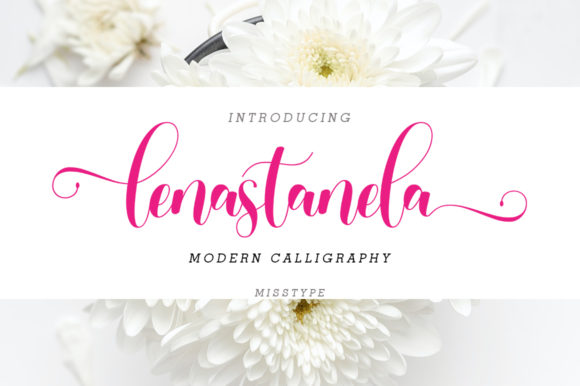
Lisa Angel: A Friendly Handwritten Display Font for Warm Brand Identities
It started with a blank brand board and a client who described her new handmade ceramics studio as “quiet, earthy, and full of gentle intention.” No flashy slogans. No loud visuals. Just warmth—felt in the clay, the glaze, the way she shaped each mug by hand. I opened my font library, scrolled past the sleek sans serifs and dramatic serif display fonts, and landed on Lisa Angel. Not because it was trending—but because its first glance felt like a quiet nod: soft, sincere, and unmistakably human.
Lisa Angel is a handwritten display font that breathes ease into branding. It’s not fussy or overly ornate, but it’s never flat either—those subtle swashes and contextual ligatures give it rhythm, like ink flowing from a well-loved pen. The lowercase ‘a’, ‘g’, and ‘y’ have just enough bounce to feel alive; the capitals carry delicate flourishes that read as thoughtful, not theatrical. It’s the kind of script you’d see hand-lettered on a chalkboard menu at a neighborhood café—or carefully stamped onto a linen tea towel at a slow-living boutique.
I tested Lisa Angel first on the studio’s logo lockup. Using only the name (no tagline), I set it in all caps with the default ligatures enabled—and immediately noticed how the connections between letters softened the edges without sacrificing clarity. On a white business card mockup, it held presence at 14 pt, but truly sang at 28–36 pt: friendly, legible, and quietly confident. For the shop sign, I paired it with a warm-toned matte laminate background—no shadow, no stroke—just pure type. It looked tactile, like something you’d want to trace with your finger.
As a display font, Lisa Angel works best where personality matters most: logos, signage, product labels, social media headers, and hero sections on websites. It’s not built for long paragraphs—that’s where pairing becomes essential. I anchored it with a clean, slightly rounded sans serif (think a humanist design like Poppins or Nunito) for body copy, captions, and navigation. The contrast worked beautifully: Lisa Angel brought soul; the sans brought structure. No competing scripts, no over-designed combos—just two voices that listened to each other.
What surprised me most was how well it translated across formats. On a small 2” x 3” sticker for ceramic mugs, the swash on the capital ‘L’ added just enough charm without bleeding or blurring. In an Instagram carousel post, it stayed crisp even when scaled down for mobile thumbnails—thanks to its generous x-height and open counters. And on printed packaging? It held up impressively in spot-color letterpress, where fine details often collapse. The font includes OpenType features like discretionary ligatures and stylistic alternates, which I used selectively—swashes only on initial letters in headlines, alternate ‘t’ forms for visual interest in repeated phrases.
One practical note: Lisa Angel is a single-weight display font—not a full family with bolds or italics. That’s not a limitation; it’s a cue. Use it intentionally. As a logo font? Perfect. As an accent for section headers on a website? Yes. As the sole typeface across an entire brand system? Not ideal. Its strength lies in contrast and context—not coverage. I kept it strictly for moments that needed warmth and humanity: the studio’s welcome message on their homepage, the hand-drawn “Made with care” line on packaging tape, the title treatment on their seasonal workshop flyer.
For editorial design—like a simple zine or product catalog—I used Lisa Angel sparingly: only for chapter titles and pull quotes. Body text stayed in a warm serif (Cormorant Garamond, in this case) to ground the layout. The combination created breathing room and hierarchy without shouting. Readers paused at the handwritten headline, then settled comfortably into the serif’s rhythm. That balance—playful yet polished—is where Lisa Angel shines.
I also checked licensing before moving forward. Lisa Angel is a commercial font, fully cleared for use in client work—including physical products, digital templates, and merchandise. It comes in OTF and WOFF2 formats, with multilingual support covering Western European languages (including accented characters common in French, Spanish, and German). That mattered for the studio’s upcoming pop-up in Montreal—where bilingual packaging needed to feel cohesive, not patched together.
Before finalizing anything, I did three quick real-world checks: printed a test label on actual sticker stock, previewed the web version on both iOS and Android, and asked two non-designer friends (one who runs a flower shop, one who teaches pottery) what emotion the logo evoked. Their answers? “Welcoming,” “handmade,” “calm.” No mention of “font” or “typeface”—which, honestly, is the highest compliment.
If you’re choosing a display font for a brand that values authenticity over polish, Lisa Angel fits like a favorite apron—comfortable, expressive, and quietly intentional. It won’t solve every typographic challenge, and it shouldn’t. But when you need a handwritten voice that feels genuine—not cutesy, not generic—it offers something rare: warmth with weight, friendliness with finesse.
Just remember: let it breathe. Use it where attention lands first. Pair it with typefaces that respect its sincerity. And always, always test it where it’ll live—not just in your design app, but on the shelf, the screen, the sticker, the sign. Because great typography isn’t about how it looks in isolation. It’s about how it makes people feel when they meet your brand for the first time.